Winstler Casino UK: Availability and Regulatory Context
 Available in GB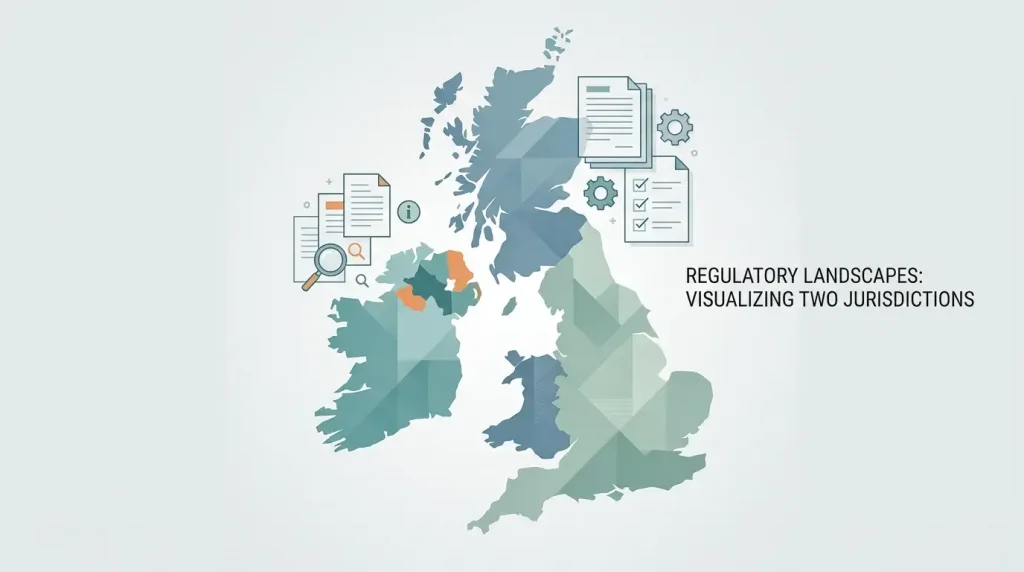
Updated 29 September 2026
For readers in England, Scotland and Wales, the key regulatory fact is straightforward: a business providing remote gambling to consumers in Great Britain needs the relevant UK Gambling Commission licence. No matching Winstler licence entry is shown in the current UKGC register information. Northern Ireland is different because the Gambling Commission’s Gambling Act remit covers Great Britain, not Northern Ireland’s gambling activity generally. At the same time, visible current general-account terms do not establish a blanket United Kingdom prohibition. Current UK account eligibility therefore remains unresolved rather than being presented as either confirmed acceptance or a blanket ban. Licensing status and account eligibility are separate questions.
Table of Contents
- The short answer for UK readers
- Great Britain and Northern Ireland: two regulatory contexts
- What the Great Britain licensing requirement actually tells you
- Northern Ireland does not simply inherit Great Britain rules
- What GAMSTOP does and does not establish here
- A current Great Britain benchmark changes on 30 September 2026
- Why current account eligibility remains a separate check
- UK account and licence status on 29 September 2026
- Current regulatory and account-access context
- Bottom line
The short answer for UK readers
Winstler should not be described as a UKGC-licensed casino. The UK Gambling Commission’s public business register is the primary listing for checking whether a gambling business holds a Great Britain operating licence, and no matching Winstler, current-domain or current-operator entry appears. The register page itself was updated on 29 September 2026. The Commission also states that operators based abroad still need a licence if they provide remote gambling to consumers in Great Britain.
That local-licence result is important, but it answers one narrow question. It does not, by itself, prove what Winstler’s current registration flow will do with every address in England, Scotland, Wales or Northern Ireland. The available third-party signals on UK acceptance conflict, while visible current general-account country terms do not settle the question. A lack of accessible terms is not proof of a UK geoblock.
If you want the underlying licence record rather than the broader UK context, use the Winstler licence and UKGC status. That page keeps the current foreign licence record, UKGC register check and legacy licence references separate.
Great Britain and Northern Ireland: two regulatory contexts
Using “UK” as a single shorthand can hide a material distinction. The UK Gambling Commission says its jurisdiction under the Gambling Act 2005 covers Great Britain: England, Scotland and Wales. Northern Ireland is outside that general Gambling Act regulatory remit for gambling activity, although there are specific interactions involving advertising, equipment and National Lottery responsibilities.
| Area | Primary regulatory position | What the Great Britain licence position means |
|---|---|---|
| England, Scotland and Wales | These form Great Britain for UKGC remote-gambling licensing. A remote operator serving consumers there needs the relevant UKGC licence. | No matching Winstler UKGC licence entry is shown in the current register information, so UKGC licensing and UKGC consumer-protection coverage should not be attributed to Winstler. |
| Northern Ireland | Gambling is governed under a separate framework centred on the Betting, Gaming, Lotteries and Amusements (NI) Order 1985 as amended in 2022. | Great Britain rules should not be copied across as if Northern Ireland were regulated in exactly the same way. |
The distinction is not academic. The Gambling Commission’s own Northern Ireland guidance says that it does not regulate gambling activity there under the Gambling Act in the same way it regulates Great Britain. The Northern Ireland Department for Communities states that the 1985 Order, as amended by the 2022 Act, remains the core current framework and that wider reform aimed at online gambling formed a proposed second phase. That means a careful UK review has to identify which jurisdiction a rule belongs to before applying it.
What the Great Britain licensing requirement actually tells you
The UK Gambling Commission’s remote-sector guidance says that a licence is needed to provide facilities for remote gambling to consumers in Great Britain. Its remote casino operating licence page makes the point even more clearly: the requirement applies regardless of where the operator is based in the world when it provides online casino gambling to consumers in Great Britain.
For a reader, that tells you how Great Britain’s regulated market is structured. It also gives you a concrete check: search the Commission’s public register for the brand, trading name, operator and domain. The current register information does not show a matching Winstler UKGC licence entry. Winstler should therefore not be treated as part of the UKGC-licensed market or as carrying UKGC-specific protections.
It is equally important not to stretch that point beyond the information. A missing local licence is not the same type of information as visible current operator terms that explicitly say residents of a named country cannot register, play, deposit, withdraw or hold an account. Visible current general-account information does not establish such a blanket UK prohibition. The local licensing result and current player acceptance therefore remain separate questions.
Northern Ireland does not simply inherit Great Britain rules
The current Northern Ireland Department for Communities overview states that gambling, other than the National Lottery, is regulated under the Betting, Gaming, Lotteries and Amusements (NI) Order 1985, as amended by the Betting, Gaming, Lotteries and Amusements (Amendment) Act (Northern Ireland) 2022. The Department also notes that courts and district councils license and certify many gambling activities, while enforcement responsibility lies with the Police Service of Northern Ireland.
Online gambling is one of the reasons the distinction matters. The Department’s current overview explains that the proposed second phase of reform was intended to address wider online-gambling regulation. The UK Gambling Commission, meanwhile, says its Gambling Act jurisdiction covers Great Britain and that it does not regulate gambling activity in Northern Ireland generally. The Commission does note specific circumstances in which a remote operator offering or advertising gambling in Northern Ireland can still need a Commission licence, so the relationship is more nuanced than a simple “UKGC applies” or “UKGC does not apply” label.
A Great Britain licence result should not be used as a shortcut for a Northern Ireland legal conclusion. When Northern Ireland matters specifically, its current framework and the current operator terms need to be considered separately.
What GAMSTOP does and does not establish here
GAMSTOP is the national online self-exclusion scheme used by online gambling companies licensed in Great Britain. GAMSTOP’s own information says that people who register are blocked from signing up for or using online accounts with gambling companies licensed in Great Britain, and its guidance states that all online gambling companies licensed in Great Britain must participate.
GAMSTOP coverage follows the Great Britain licensed market rather than the nationality of a reader. Because no matching Winstler UKGC licence entry is shown in the current register information, GAMSTOP coverage and protections should not be attributed to a Winstler account.
This is not a workaround guide and it should not be read as encouragement to bypass self-exclusion. If you have chosen to self-exclude, the safer course is to maintain that exclusion and use blocking or support tools that reinforce it rather than searching for operators outside a scheme.
A current Great Britain benchmark changes on 30 September 2026
On 30 September 2026, new UKGC Remote Gambling and Software Technical Standards requirements for financial limits take effect for the licensed Great Britain market. The Commission’s current RTS 12B material says that from 30 September 2026 gambling systems must offer gross deposit limits as a minimum, must describe qualifying gross limits as deposit limits, and must give those limits at least equal prominence where multiple types of financial limit are offered.
This is Great Britain regulated-market context, not a Winstler product feature. Without a matching Winstler UKGC licence entry, the UKGC technical standard should not be attributed to Winstler. Local regulatory requirements should not be automatically attached to an offshore-licensed brand.
Why current account eligibility remains a separate check
Current UK account acceptance remains unresolved. Some third-party material says UK players are excluded, while recent user reports labelled as Great Britain describe activity on the current domain. User reports cannot establish eligibility and third-party review claims cannot trigger a definitive ban finding. Current operator terms, the country selector and the account registration flow are the relevant places to confirm eligibility.
Visible general-account terms do not settle the issue, and third-party information conflicts. Current UK account eligibility therefore remains unresolved rather than being treated as confirmed acceptance or a blanket block.
If you reach the registration stage, use the Winstler registration page rather than assuming that a review page or a visible game catalogue settles eligibility.
For Great Britain, the local licensing question applies even when an operator is based outside Britain: the UK Gambling Commission states that a remote gambling business serving consumers in Great Britain needs the relevant Commission licence. Northern Ireland is not covered by that same Gambling Act remit. This is why England, Scotland and Wales should not be merged with Northern Ireland when discussing Winstler’s local regulatory position.
GAMSTOP follows the Great Britain licensed market. Its scope therefore does not turn a foreign licence into a UKGC licence and does not settle whether a Winstler registration flow currently accepts a particular address. Licence status, self-exclusion coverage and account eligibility remain separate account questions.
UK account and licence status on 29 September 2026
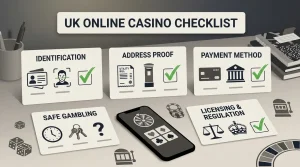
A UK reader can reduce ambiguity by checking a small set of current signals before creating or funding an account. These checks are more useful than relying on an old review’s blanket “available” or “not available” label.
- Check the UKGC business register for Great Britain. Search the brand name, current domain and operator identity. The current register information shows no matching Winstler local licence entry.
- Read the current country and restricted-territory wording. Look for general account restrictions, not a promotion-only exclusion. A bonus restriction does not prove a general registration ban.
- Check the registration country selector. If the country is selectable, that is an operational signal, but still read the terms before depositing.
- Check the cashier after login. Payment options can vary by account and location. Use the Winstler payment methods guide for category-level context, then compare it with what the live cashier actually shows.
- Separate Great Britain from Northern Ireland. Do not assume that a rule written for England, Scotland and Wales automatically describes the Northern Ireland position.
- Confirm self-exclusion expectations. Do not assume GAMSTOP coverage without a Great Britain licence. If self-exclusion is relevant to you, use tools that support the exclusion decision rather than trying to test coverage.
Current regulatory and account-access context
- UK Gambling Commission business register – current local licence register.
- UKGC remote-sector guidance – Great Britain licensing requirement for remote gambling.
- UKGC role and remit in Northern Ireland – Great Britain versus Northern Ireland scope.
- Northern Ireland Department for Communities gambling overview – current Northern Ireland framework.
- GAMSTOP information – scope of the Great Britain licensed-market self-exclusion scheme.